




Hong Kong's Trade Policy
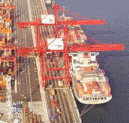 Hong Kong is a free port. We pursue a free trade policy and do not maintain barriers on trade. No tariff is charged on import or export of goods. Although licensing is required for the import and export of some goods, this is only to fulfil obligations undertaken by Hong Kong to our trading partners, or to meet public health, safety or internal security needs. The licensing procedures are as simplified as possible in such cases.
Through participating in multilateral, regional, plurilateral, and bilateral trade agreements, we secure, maintain and improve access to foreign markets for our goods and services.
Hong Kong actively supports and promotes a free, open and stable multilateral trading system. The World Trade Organization (WTO), established in 1995, succeeded the General Agreement on Tariffs and Trade (GATT). Hong Kong is a founding member of the WTO and has been participating actively in its activities. Hong Kong has continued its separate membership after return to China in 1997 using the name "Hong Kong, China".